Google has recently amplified its “content guidance,” which we have heard for years in one form or another: create non-commoditized content.
SEO’s biggest content problem?
Well, it wasn’t that we commoditized content…
Our problem is that we commoditized the sale by building the sales-first web on behalf of our brands.
We took messy human decisions, compressed them into keywords, built pages around those keywords, and moved people as quickly as possible toward “buy now.”
And it worked.
Humans used keywords. Google sent them to our pages that said: “Buying This Now is the best choice.”
And we got paid. I’m not mad. That was the game.
But now, AI search changes how users solve problems—AND what gets rewarded.
The answer follows the sources. If those sources explain your competitors better than they explain you, the model has less context from which to recommend you. If those sources don’t help a real human with a real problem make the decision, the answer has no reason to carry your brand into that decision.
So the work is no longer just getting a hyperlink to a page that targets a keyword.
The work is finding where trusted sources leave the buyer’s decision unsupported, especially where questions, constraints, or approval risks go unanswered. Then, you need to build the evidence AI systems need to understand why your brand belongs in the answer.
Targeting Keywords Isn’t Enough for AI Search
Keywords were easy.
They compressed a huge, messy problem space into one tiny little box. We saw how many people searched for it, built a page for it, got links to that page, and waited for Google to send people our way.
But we treated the keyword like the whole decision space.
It never was.
For example, look at the keyword “make a logo.” As SEOs, we know what to do: build the best content on the internet about making a logo, get links to it, and rank.
But now put that keyword inside an actual company context.
Let’s say a newly funded biopharmaceutical startup wants to make a logo. This is more than a design task—it’s a company-wide decision. The logo has to signal credibility, support sales, survive production, satisfy legal, and hold up in front of investors.
How can a single page about the topic of “logo design” serve the decision committee: the group of humans in those moments, in those roles, with those concerns?
The CEO asks, “Is this us at scale?” The board asks, “Do we look fundable?” Sales wants to know if they can sell with it. Operations wants to know if it will survive production. Legal wants to know if the mark is already taken. The market wants to know if this brand looks real.
That’s the decision space the keyword compressed.
AI has effectively decompressed that space, with personalization and query fan outs… so now content has to serve a human using AI to accomplish a task within an environment.
And they pay costs while they do it: effort, uncertainty, unknown unknowns, and sometimes misrecognition.
AI Shows the Decision Space Inside the Keyword
AI search makes that compression visible now. When a model unpacks a role-specific, solution-seeking prompt, we can see where it looks, what it reads, what it cites, and how many directions a single “topic” can fan out.
If the CEO of a newly funded biotech startup asks AI how to get started, the model has to go beyond the design question and crawl into the CEO’s decision space:
- What makes a biotech logo credible?
- Who nailed a post-raise rebrand, and who botched it?
- What will investors and pharma partners read into the brand?
- What should a non-designer use to rough out options?
These are all CEO-specific choice points: moments where the decision could go in different directions.
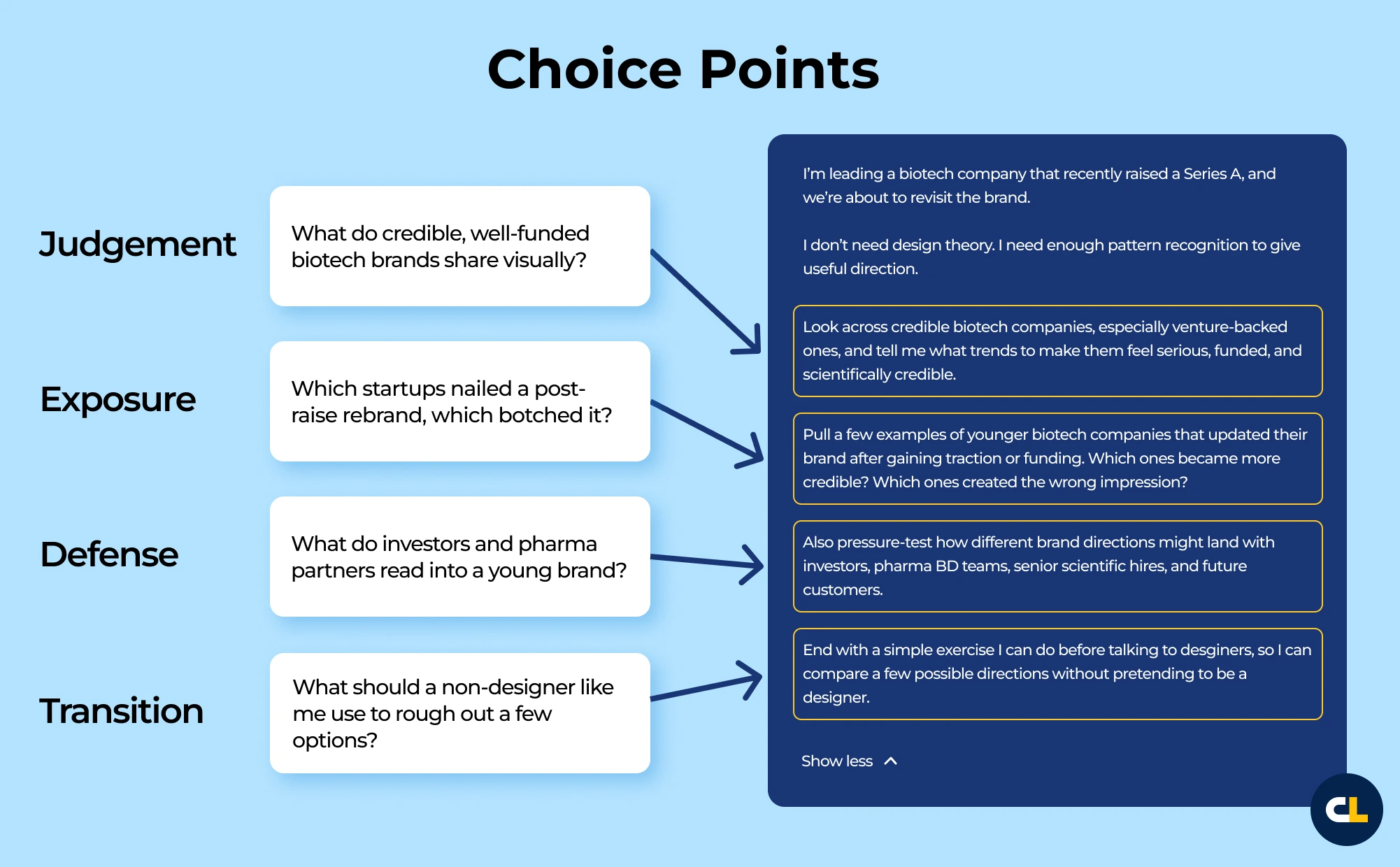
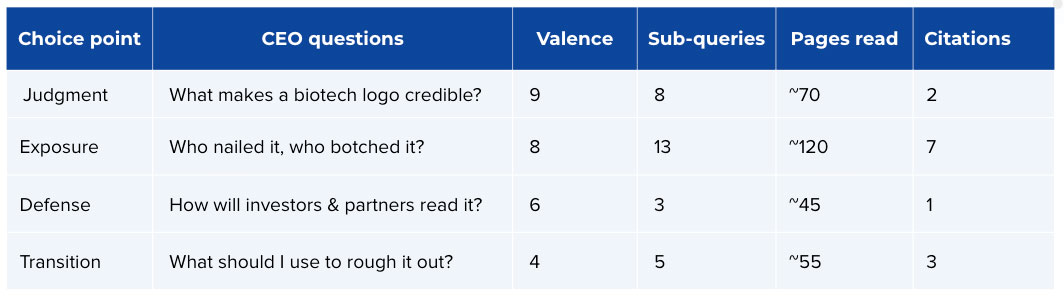
In our example, one keyword from the CEO perspective became four choice points with 29 sub-queries, roughly 290 pages read, and 13 citations.
That’s what SEOs previously compressed into the keyword, “make a logo.”
If we want content to be read-worthy and citation-worthy, the work can’t stop at the keyword. We have to understand the decision space the keyword represents.
The Missing Link? It’s Between Decision Roles
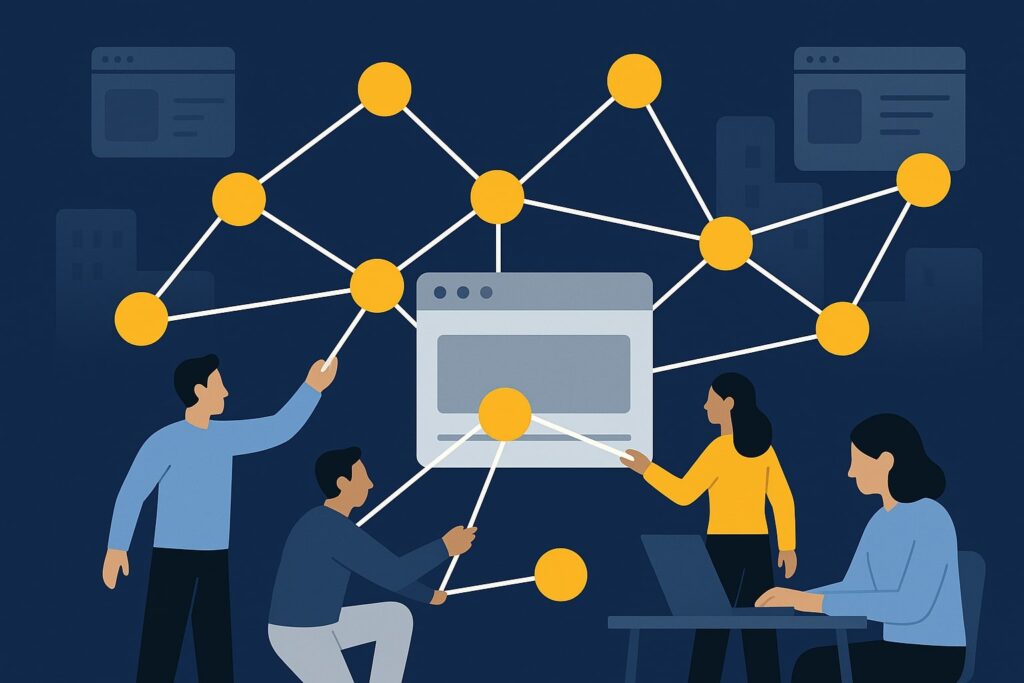
Once you look inside the decision space, the keyword gives way to a graph.
For complex or lengthy purchase decisions, the graph consists of roles: CEO, marketing, operations, legal, and anyone else whose concerns can shape or stop the decision.
Smaller B2C decisions can have the same structure, but the roles are usually internalized. One person may be weighing budget, risk, usability, credibility, and timing alone.
The CEO is a node in the graph. Marketing, operations, and legal, too—all nodes. Each role brings its own questions, sources, KPIs, anxieties, jargon, constraints, and veto power.
This is where stakeholder co-citation gap analysis comes in.
You compare the sources AI reads and cites for each role involved in the same decision, then look for where those source sets overlap and where they don’t.
The overlap shows shared ground: evidence that multiple roles can use.
The gaps indicate where one role’s concerns are unsupported by the sources that guide everyone else. Those gaps tell you what to create or place next: content that gives AI and the decision-makers enough shared evidence to move the decision forward.
In the “make a logo” example above, the model read 1,063 pages and cited 72 unique sources.
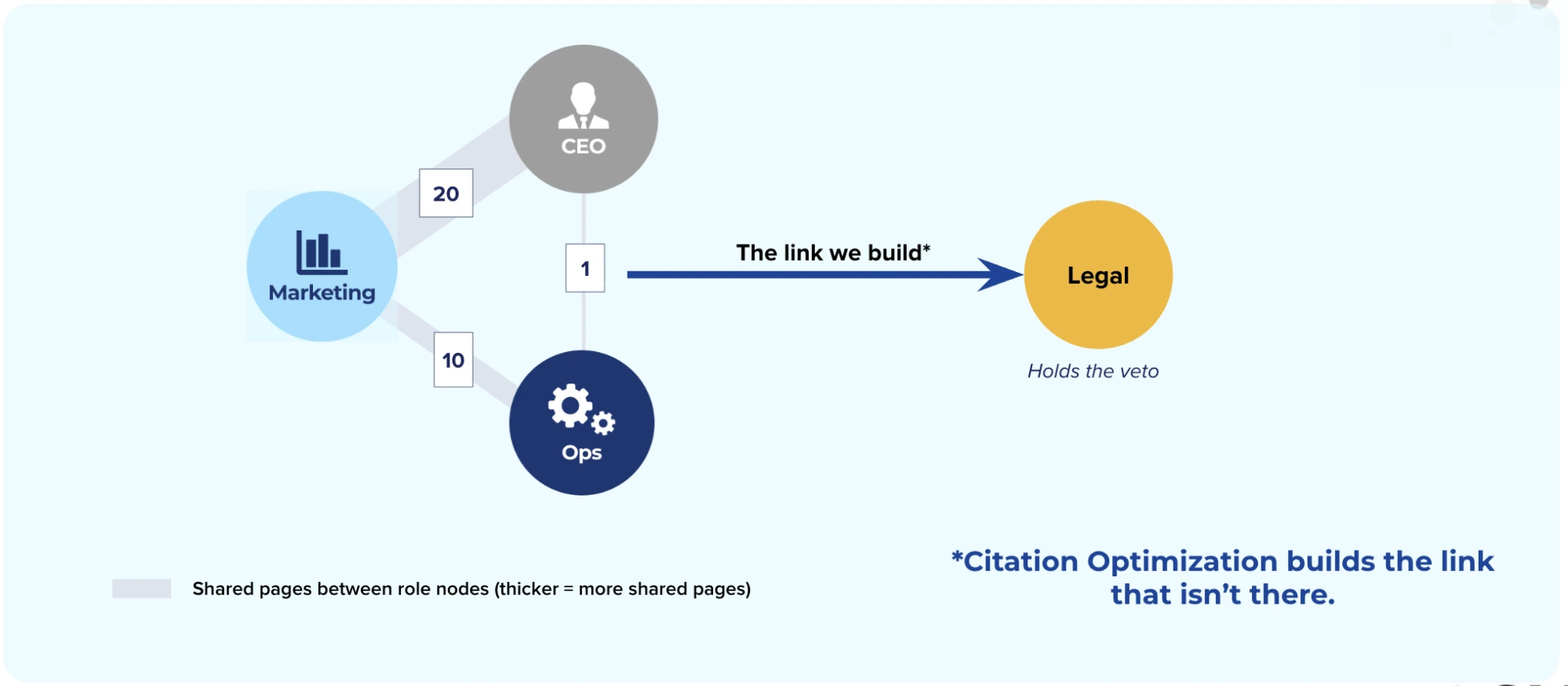
The CEO and Marketing shared 20 cited pages. That makes sense. They’re in some of the same thought/problem spaces. Ops and Marketing shared 10. CEO and Ops shared 1 (egregiously low and campaign worthy in its own right).
Then we get to Legal…
Legal’s source set had 0 overlap with the source sets used by the other roles.
The evidence Legal needed was disconnected from the evidence everyone else used to advance the decision.
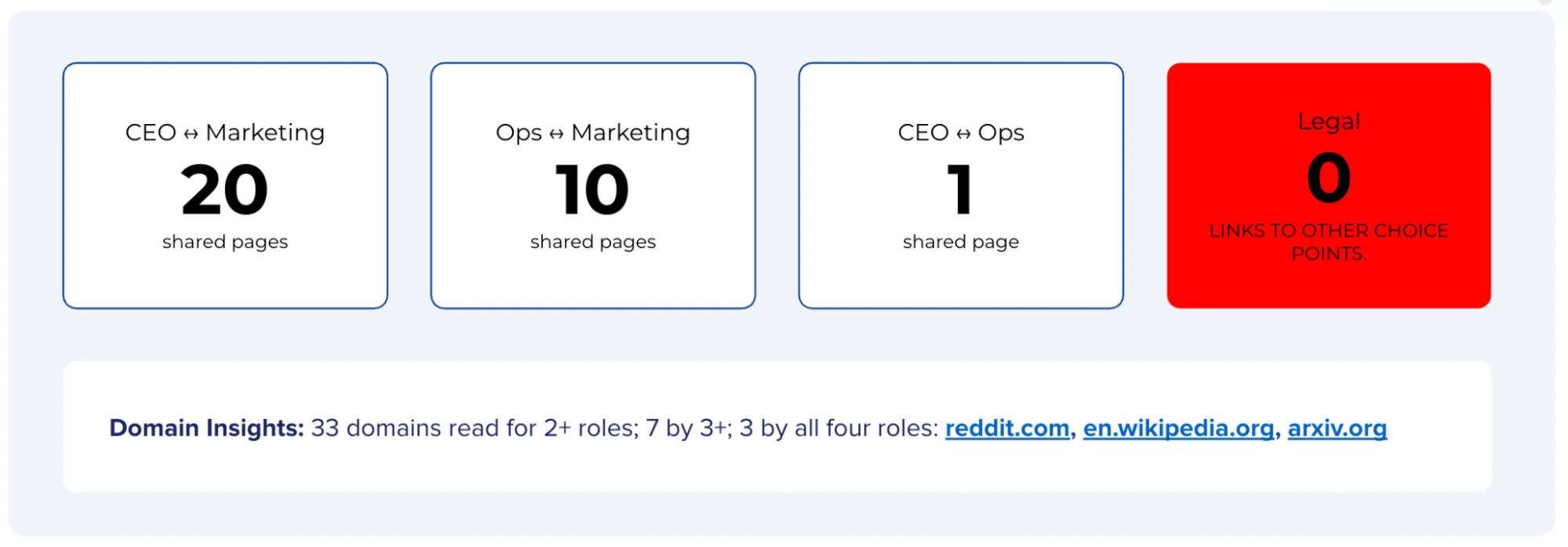
Citation gaps aren’t just about whether or not your brand shows up. They can show you where the decision committee has 0 shared ground.
In our example, Legal was the isolate: the role whose cited sources overlapped least with everyone else’s. Legal also held the veto. Their “no” could stop the decision.
That’s the link to build first.
Do we need to rank number one for “make a logo”? Maybe.
The better question is: what do we need to say so the humans in these roles can do the best they can with each other?
But if the CEO works from one source set, Marketing from another, Ops from another, and Legal from a disconnected one, the content didn’t really help the decision. It helped one person move forward until someone else stopped them.
The missing link sits between the roles: the sources AI can find, the choice points humans need to resolve, and the decision they have to make together.
This is where link building turns into citation optimization.
Citation Optimization Builds the Bridge Before the Veto Arrives
The “no” always comes.
The only question is when.
If Legal shows up after the team has picked the name, designed the logo, built the deck, updated the site, and started showing it to investors, the cost compounds.
The same “no,” different damage.
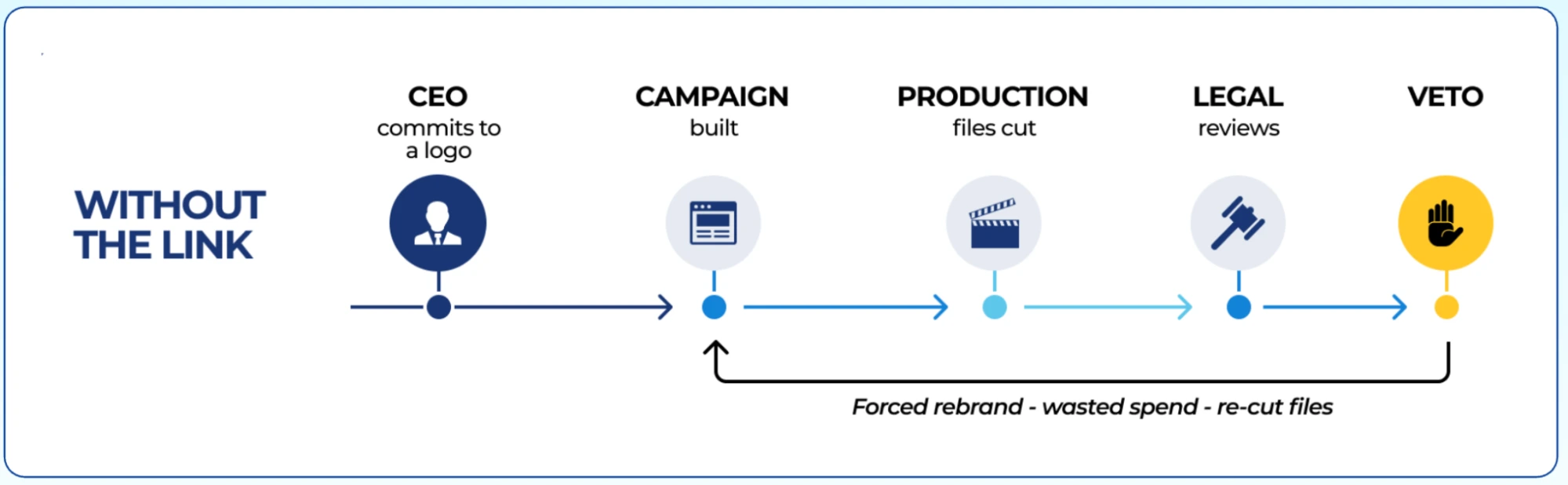
The founder looks careless. Legal looks like the blocker. Everyone feels like the work got blown up at the end.
Legal isn’t the problem. Legal is just doing its job. The issue is that no one built the link between Legal and the rest of the organization early enough.
So what needs to get published?
In the logo example, it’s not another “how to make a logo” page. It’s something like a Founder’s Preliminary Trademark Clearance Brief (a simple artifact that helps the CEO walk into Legal’s world before all the money gets spent):
- What name are we considering?
- What alternatives did we check?
- Which markets and trademark classes matter?
- Did we run image, stock asset, and trademark database checks?
- What conflicts did we find? What does counsel need to answer?
Not because the brief gets a hyperlink. It can. But the real focus is on the ability to carry the CEO cleanly into Legal. It surfaces the veto early. It reduces role-to-role friction.
The “no” still happens.
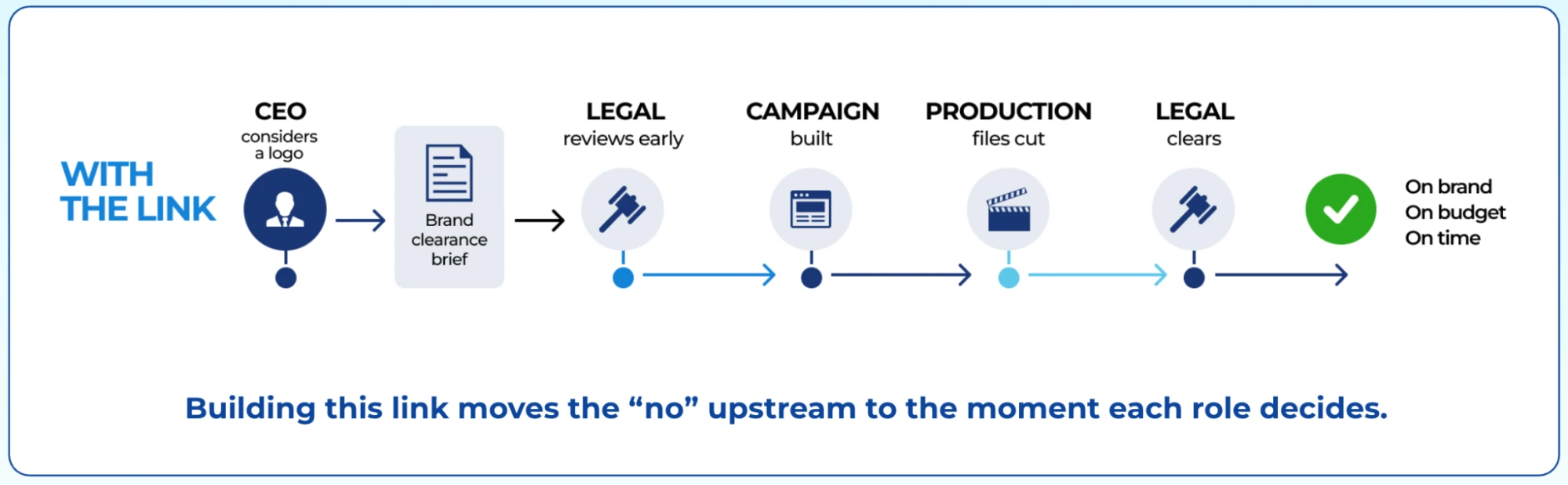
It just happens sooner. But now the founder looks diligent. Legal feels like a partner. And the team can redirect before the decision gets expensive.
That’s the ROI of an early no.
Citation optimization finds those gaps in the decision layer and closes them. It can be through an on-site page or off-site content.
Either way, your team needs to find the isolate and veto before building the assets needed to help the humans decide better together.
Link Builders Now Build Context, Not Just Links
We still build links, but think beyond the hyperlinks. We have to connect (link) the roles within a decision space, helping them work well with one another.
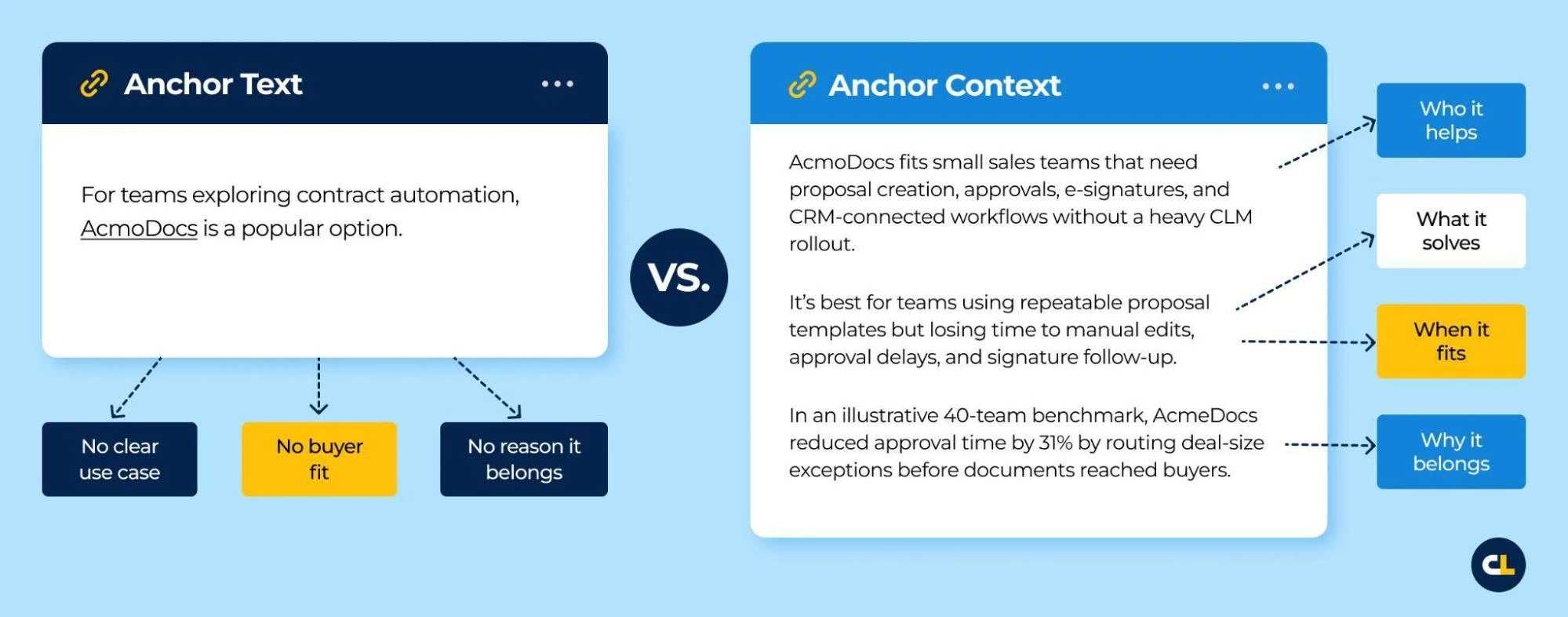
As link builders, we are familiar with anchor text. Anchor text tells search engines what a page is about.
That is no longer enough. We have to think in terms of anchor context.
Anchor context tells the model why this evidence belongs in the answer: who it helps, what it solves, when it fits, and why it belongs.
So, where do we place the evidence once we find the missing helpful content?
- On-site
- Off-site
- Source updates
- Insertions
- New pages
- New websites (if needed)
The model is already reading and citing certain sources. Go there. If those sources explain your competitors better than they explain you, the answer follows the sources.
We have seen this move AI visibility.
ZenBusiness had relevant on-site content, but AI systems were not connecting the brand to a priority service differentiator. So we used Xofu data to find the citation gap, then built off-domain, choice-point content that connected the brand to the missing feature.
Within three weeks, AI Mode citation presence moved from 6.3% to 33.3%. AI Mode rank-one visibility moved from 74% to 89%. Gemini rank-one visibility moved from 46% to 62%.
That does not prove final ROI.
But it’s movement.
When you understand what the model reads, what it cites, and where the decision space is under-supported, you can influence what LLMs say.
This is how 15 years of link building prepared me for AI search.
Link builders already know how to look for missing evidence. We already know how to think about source authority, placement, surrounding context, and the paths information takes before it shapes a decision.
AI search makes the old link-building instincts more explicit.
But the work is bigger now.
The link to build is no longer only between pages. It’s between the sources AI reads, the roles humans play, and the decision they’re trying to make.
Build the links that help humans decide.