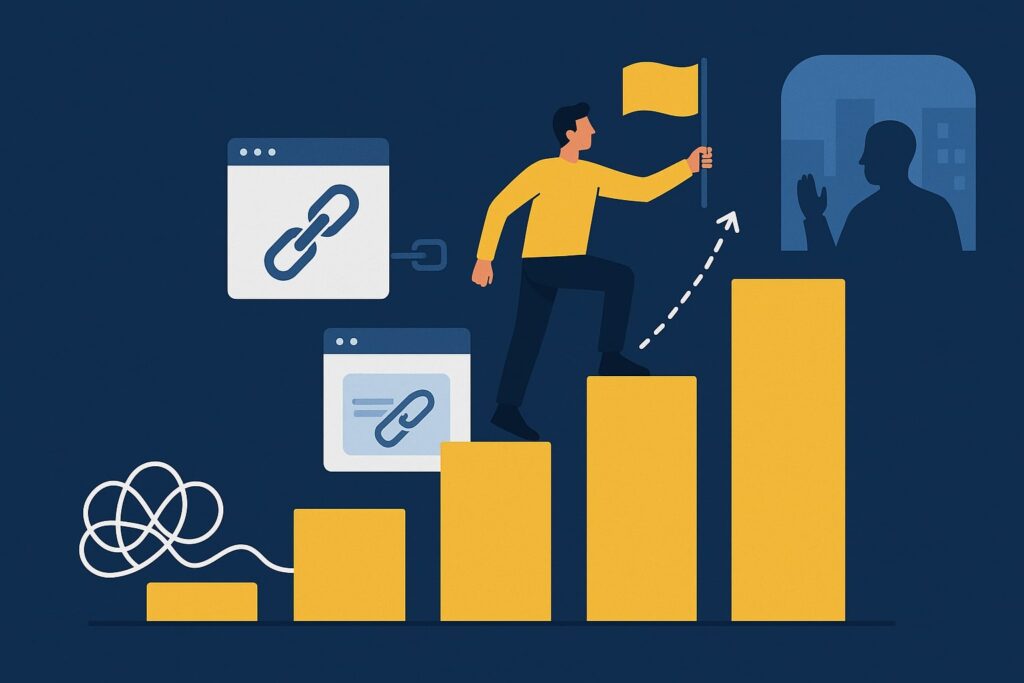
Broken Link Building: It’s not like the department store; it’s like the flea market.
If you go with a list in hand, instead of an open mind, you’re going to miss out on big opportunities, and you may not find what you were looking for.
In our February 2015 webinar, Garrett French discusses exactly that: how to approach broken link building from the right perspective. This is a great resource for teams and link builders who are looking into BLB tactics, but just aren’t sure where to start. Or, if you’ve given broken link building a whirl and haven’t had the best results, we’ve got a few ideas to get you back on your feet.
We highly recommend this video for all new users of our Broken Link Building tool.
Broken Link Building includes two different approaches:
- 1:1 Replacement (the more traditional approach) involves recreating a dead page, without violating copyrights, and sending your new page to the broken page’s linkers.
- Fix + Suggestion is a great tactic for large sites that have simply moved to a new URL, as government sites can tend to do. This info may be too big for a team to reasonably recreate in scope, but broken link builders can reach out with the correct link and a suggested complementary page that they’ve created.
But for both types of broken link building, you’ve got to approach prospecting with an open mind and a willingness to create material that’s brand adjacent. Teams who can only post directly on-brand material will likely have a hard time finding that perfect site.
Finding the Right BLB Search Terms:
If you are ready for some ‘flea market’ surprises and willing to go where the content takes you, the next step in the process involves finding the right broken link prospecting terms. If you dive into a tool like our Broken Link Builder with the wrong terms (read: SEO keywords), you’re less likely to come back from the BLB bazaar with a prize.
The best place place to go out in search of some good key terms is DMOZ. DMOZ is a hand-curated search engine that’s organized by ontology. Meaning, when we type terms into DMOZ, we get results, but we also get lists of related terms and the number of results for each related term.
In the webinar, Garrett shows how someone with a sleep health site may benefit from DMOZ by finding that sleep apnea is a highly linked term in the sleep health space. He or she may then see what broken sites exist in the sleep apnea space. In sum, DMOZ, as well as WorldCat (which uses the Dewey decimal system in its search) are a great way to find the most highly linkable topics related to your SEO keywords.
Once You Have Some BLB Search Terms:
The next steps are prospecting and outreach. We ran out of time in this webinar to discuss best practices for broken link prospecting, but here are some other great resources for broken link building campaigns:
- Citation Labs Broken Link Builder Tool Guide
-
The Broken Link Building Bible – this post goes through every step of broken link building in incredible detail. It also recommends other relevant tools.